Every year, numerous incidents occur due to the inappropriate choice of the lifting equipment used to access elevated areas. While using a ladder might be tempting when there is an issue of stability, heavy-duty tools, the number of employees involved, or a prolonged work schedule, such a choice poses a danger. In such cases, a scissor lift is a must-have piece of equipment that is no longer considered a luxury.
Whatever sector you operate in – warehouse, factory, construction, shopping mall, airport or any other facility – the selection of the proper lifting equipment will play the decisive role in ensuring safety, productivity and efficiency of your business. Sadly enough, most buyers concentrate on price without analyzing the actual needs for their work. Consequently, extra downtime, high maintenance costs, and accidents take place.
At Usha Elevator, we consider informing our customers a part of the service before any purchase is made. We aim to make our clients not just invest in the equipment but to learn how lifting solutions help to ensure workplace safety, increase productivity, and minimize operational difficulties. This guide will tell you everything about scissor lifts, their principle of work, usage, benefits, technical specifications, and purchasing issues.
What is a Scissor Lift?
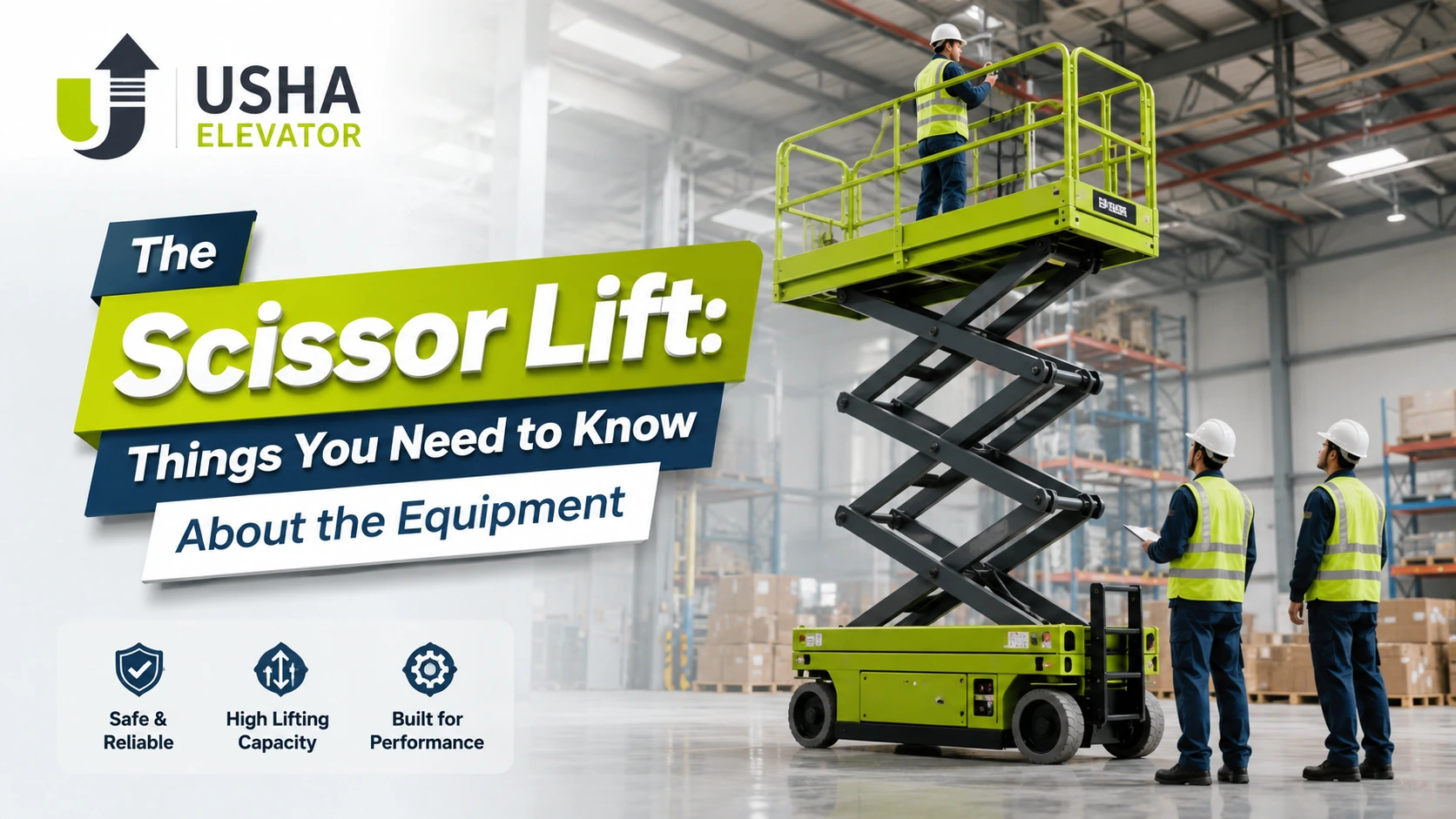
A scissor lift is a vertical elevator that has been developed to help lift the worker, materials, or any other equipment to various heights. It is made up of metal parts that open and close in a way that looks similar to scissors, making the platform rise and lower vertically.
Scissor lift, unlike the crane and the boom lift, offers an ample amount of platform space for the workers to do the work, along with carrying the materials and tools. Due to its remarkable stability and high load-carrying capacity, it has become one of the most popular lifts among the industries.
There are scissor lifts of hydraulic, electric, battery-operated, and even diesel-powered types.
Why Industries Depend on Scissor Lifts
Industries today cannot afford delays caused by unsafe access methods or inefficient manual lifting. A properly selected scissor lift improves productivity by reducing setup time, minimizing worker fatigue, and providing secure access to elevated work areas.
Businesses also benefit from lower accident risks, better compliance with workplace safety regulations, faster maintenance operations, and reduced labor costs. Instead of relying on temporary platforms or unstable ladders, organizations can complete work confidently with better precision and efficiency.
Scissor Lift
This lift has been specifically designed to move vertically and has been built to achieve utmost stability. The lift has a wide work deck that can carry both employees and equipment. Sectors such as the manufacturing sector, logistics sector, warehousing sector, maintenance of retail shops, and construction projects need such lifts since they will make their operations efficient and minimize the hazards in the workplace.
Caesar Lift
Caesar Lift is a common phrase in numerous sectors that refers to the scissor lift. The only difference between the two is that they have different pronunciations since both are actually the same type of lifting equipment that uses the scissor principle. This is a good search term when one is trying to purchase industrial lifting equipment or maintenance lifts.
Scissor Lifter
A scissor lift is a piece of machinery that can be used to raise people or materials vertically in a safe way. These types of lifts have many applications, which include but are not limited to assembly line, loading dock, machine servicing, inventory control, and installation of equipment. The well-constructed platforms make it easy to do the same task repeatedly without any trouble.
Scissors Lift
A lot of individuals have come to know of this equipment as a scissors lift, particularly while conducting searches on the internet. No matter what the term is, it basically means the same thing, which is a lifting system that is safe and easy to use. Scissors lifts have been favored by businesses for the simple reason that they make jobs easier.
Ceaser Lift
Keyword Ceaser Lift is yet another common misspelling which is used by many shoppers during their online search. Despite the change in spelling, the meaning remains the same as far as the lifting platform is concerned. It does not matter whether you search for a scissor lift, caesar lift, or ceaser lift because the equipment will give you the same advantages.
Lifting Scissor
Generally, the term lifting scissor refers to the scissors lift system found in the equipment. The cross-shaped structure is able to distribute load uniformly during the lifting process, thus ensuring that the raised platform is stable despite the heavy load. The design ensures that the lifting scissor system can hold people and equipment and move vertically.
How Does a Scissor Lift Work?
How a scissor lift operates involves an expandable and retractable interconnected framework. Hydraulic lifts, electric motors, or pneumatic mechanisms provide the energy necessary for the lifting action through the expansion of the scissor arm components to move upward. Expansion causes elevation of the platform. The mechanism then retracts once the pressure is released, lowering the platform to its initial position.
Contemporary lift machines have incorporated additional safety devices such as safety locks, emergency lowering mechanisms, overload protection, anti-slip platforms, emergency stop switches, railings, and smooth control systems.
Major Components of a Scissor Lift
The performance of a scissor lift depends on several important components working together:
- Heavy-duty scissor arm mechanism
- Stable working platform
- Hydraulic or electric lifting system
- High-strength steel frame
- Safety guard rails
- Control panel
- Emergency stop system
- Power unit
- Wheels or stationary base
- Overload protection system
Each component plays a critical role in ensuring reliable and safe lifting performance.
Technical Specification Table
| Specification | Details |
|---|---|
| Equipment Type | Vertical Hydraulic Scissor Lift |
| Working Mechanism | Scissor Arm Structure |
| Lifting System | Hydraulic / Electric |
| Platform Type | Anti-slip Steel Platform |
| Load Capacity | 300 kg – 5000 kg (Depending on Model) |
| Lifting Height | 2 m – 20 m+ |
| Platform Size | Customizable |
| Power Source | Electric, Battery or Hydraulic |
| Operation | Push Button Control |
| Safety Features | Emergency Stop, Guard Rails, Overload Protection |
| Material | Heavy-Duty Mild Steel |
| Surface Finish | Powder Coated / Industrial Paint |
| Installation | Indoor & Outdoor Applications |
| Maintenance | Low with Periodic Inspection |
| Applications | Warehouse, Factory, Construction, Maintenance, Logistics |
Industries That Use Scissor Lifts
Scissor lifts have become indispensable across numerous industries because they offer safe vertical access without compromising worker stability.
Common applications include:
- Manufacturing plants
- Warehouses
- Automobile workshops
- Airports
- Shopping malls
- Hospitals
- Hotels
- Construction sites
- Industrial maintenance
- Food processing industries
- Pharmaceutical plants
- Electrical maintenance
- Facility management
- Logistics centers
- Commercial buildings
Benefits of Using a Scissor Lift
The greatest advantage of a scissor lift is workplace safety. Employees can perform elevated tasks on a stable platform instead of balancing on ladders or temporary scaffolding.
Additional benefits include:
- Faster completion of maintenance work
- Reduced labor fatigue
- Better productivity
- High load carrying capacity
- Stable working platform
- Easy operation
- Long service life
- Lower maintenance costs
- Improved workplace efficiency
- Compliance with industrial safety standards
Common Mistakes Buyers Should Avoid
Many businesses purchase lifting equipment without carefully evaluating their operational requirements. This often leads to unnecessary expenses and reduced efficiency.
Avoid these common mistakes:
- Choosing equipment only based on the lowest price.
- Ignoring actual lifting height requirements.
- Overlooking platform load capacity.
- Purchasing without considering future expansion.
- Ignoring safety certifications.
- Not checking maintenance support.
- Selecting unsuitable power options for the work environment.
Making an informed decision saves both time and money over the equipment’s lifetime.
Maintenance Tips for Long-Term Performance
Proper maintenance not only extends equipment life but also ensures operator safety.
Follow these best practices:
- Inspect hydraulic systems regularly.
- Check all safety locks before operation.
- Keep the platform clean.
- Lubricate moving joints periodically.
- Inspect electrical wiring.
- Test emergency stop functions.
- Replace damaged components immediately.
- Never exceed rated load capacity.
- Perform scheduled preventive maintenance.
- Train operators before machine usage.
Routine inspections help prevent unexpected failures and costly downtime.
Choosing the Right Scissor Lift
Every place of work has specific lifting needs. Before choosing equipment, consider maximum working height, platform dimensions, load capacity, use indoors or outdoors, floor type, operating frequency, and power availability.
At Usha Elevator, we always recommend our customers start with their problems and not with the equipment. Proper lifting equipment must address safety issues, increase efficiency, cut maintenance costs, and help in growing business in the future. This way you will make sure to purchase equipment that works well for you for years to come.
Frequently Asked Questions
What is a scissor lift used for?
A scissor lift is used to safely lift workers, materials, and equipment vertically for maintenance, construction, warehouse operations, installation work, and industrial applications where elevated access is required.
How high can a scissor lift reach?
Depending on the model, scissor lifts can reach working heights ranging from approximately 2 meters to over 20 meters. The ideal height depends on the intended application and load requirements.
Is a scissor lift safer than a ladder?
Yes. A scissor lift provides a stable platform with guard rails, emergency controls, and safety systems that significantly reduce fall risks compared to traditional ladders.
What industries commonly use scissor lifts?
Manufacturing, logistics, warehouses, airports, hospitals, shopping malls, construction companies, maintenance contractors, pharmaceutical industries, and commercial facilities commonly use scissor lifts.
How often should a scissor lift be maintained?
Regular visual inspections should be performed before every use, while comprehensive preventive maintenance should follow the manufacturer’s recommended service schedule to ensure optimal safety and performance.
How do I choose the right scissor lift?
Consider your required lifting height, load capacity, platform dimensions, working environment, power source, operating frequency, and safety requirements. Selecting equipment based on actual operational needs provides better long-term value than choosing solely on purchase price.
Final Thoughts
The scissor lift is not just equipment that lifts loads but an investment in the safety of workers, efficiency of operations, and the assurance of employees about their security. Enterprises that give priority to the reliability of lifting equipment will benefit from having fewer accidents, less downtime, and higher efficiency in the long run.
It is always advisable to learn about your needs first and analyze what kind of performance you require before you decide to purchase. At Usha Elevator, we feel that knowledge is power and well-informed clients make the right decisions. This way you will not only improve the safety of your workplace but increase its efficiency as well.