Hydraulic lifts have become a popular choice for residential buildings, commercial complexes, hospitals, warehouses, and industrial facilities. These lifts are designed to transport people and goods safely between different floors. If you have ever wondered how a hydraulic lift moves up and down without the traditional cable and counterweight system, understanding the basic principle behind its operation can be helpful. Usha Elevator offers advanced hydraulic lift solutions built to various building requirements, ensuring safety, comfort, and efficiency.
What is Hydraulic Lift?
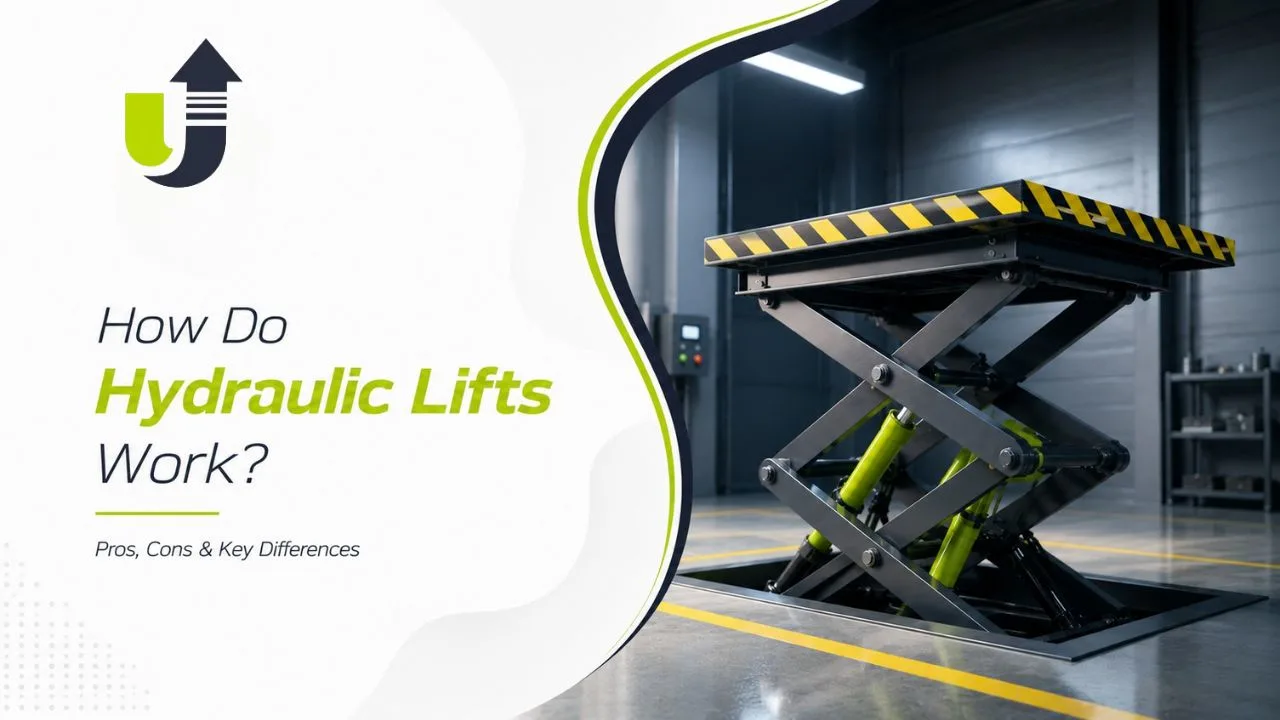
A hydraulic lift is a type of elevator that uses hydraulic fluid pressure to move the lift car. Instead of relying on ropes, pulleys, and counterweights, a hydraulic system uses a pump to force hydraulic oil into a cylinder. The pressure generated inside the cylinder pushes a piston upward, which lifts the elevator car.
Hydraulic lifts are commonly installed in low-rise buildings because they provide dependable operation while requiring less overhead space compared to traction elevators.
Hydraulic Lift Explanation: Why Is It Efficient?
A detailed hydraulic lift explanation shows why these elevators are preferred in many applications. Since hydraulic lifts do not require a large machine room above the shaft, they can be installed in buildings with limited structural space. The hydraulic system generates substantial lifting force, making these elevators ideal for transporting heavy loads. Their simple design also contributes to reliable performance and reduced mechanical complexity.
Advantages of Hydraulic Lifts
- Smooth and Quiet Operation: A hydraulic lift provides smooth acceleration and deceleration, ensuring a comfortable ride for passengers.
- High Load Capacity: Hydraulic systems can handle significant weight, making them suitable for freight elevators, hospitals, and industrial facilities.
- Lower Initial Installation Cost: Compared to some traction elevator systems, hydraulic lifts often require lower installation investment for low-rise buildings.
- Flexible Building Design: Since there is no need for an overhead machine room, architects have greater flexibility in building design.
- Reliable Performance: The working of hydraulic lift involves fewer moving parts than many traction systems, which can contribute to dependable operation.
Working of Hydraulic Lift
The working of hydraulic lift is based on Pascal’s Law, which states that pressure applied to a confined fluid is transmitted equally in all directions.
Here is a step-by-step explanation of the working of hydraulic lift:
- Lift Call Activation: When a user presses the lift button, the control system sends a signal to start the hydraulic pump.
- Hydraulic Pump Operation: The electric motor powers the hydraulic pump, which draws hydraulic oil from the reservoir and forces it into the cylinder.
- Piston Movement: As hydraulic oil enters the cylinder, pressure builds up beneath the piston. This pressure pushes the piston upward.
- Elevator Car Ascends: Since the lift car is connected directly or indirectly to the piston, the upward movement of the piston raises the elevator car to the desired floor.
- Reaching the Destination: Once the lift reaches the selected floor, the control system stops the pump, and the elevator remains stationary.
Disadvantages of Hydraulic Lifts
- Limited Travel Height: Hydraulic lifts are generally best suited for low-rise buildings. They are not ideal for very tall structures.
- Higher Energy Consumption: The pump motor consumes energy while lifting the car, which may result in higher operating costs compared to some traction elevators.
- Potential Oil Leakage: Hydraulic systems require proper maintenance to prevent oil leakage and ensure long-term efficiency.
- Slower Speed: Hydraulic lifts typically operate at lower speeds than traction elevators, making them less suitable for high-rise buildings.
Hydraulic Lift vs Traction Lift
Understanding the key differences between these elevator types can help in selecting the right system.
1. Drive Mechanism
A hydraulic lift uses fluid pressure and a piston, while a traction lift uses ropes, pulleys, and a counterweight.
2. Building Height
Hydraulic lifts are best for low-rise buildings, whereas traction lifts are suitable for medium and high-rise structures.
3. Speed
Traction elevators generally offer faster travel speeds.
4. Installation Cost
Hydraulic lifts often provide a more economical solution for smaller buildings.
5. Maintenance
Both systems require maintenance, but hydraulic lifts have fewer mechanical moving components.
Safety Features of Hydraulic Lifts
Modern hydraulic lifts incorporate several safety mechanisms, including:
- Emergency lowering systems
- Overload protection
- Door interlocks
- Emergency stop buttons
- Pressure relief valves
- Backup power systems
These features help ensure passenger safety and reliable operation.
Why Choose Usha Elevator?
Usha Elevator is a trusted name in the elevator industry, we offer innovative and reliable vertical transportation solutions. Our company offers customized hydraulic lift systems designed to meet the specific needs of residential, commercial, and industrial projects. With a focus on safety, quality, and long-term performance, we deliver solutions that combine efficiency with user comfort.
A proper hydraulic lift explanation reveals how hydraulic pressure is used to move the elevator safely and efficiently. While hydraulic lifts are best suited for low-rise buildings, they offer several advantages such as smooth operation, high load capacity, and cost-effective installation. With advanced solutions from Usha Elevator, customers can enjoy dependable and efficient lift systems tailored to their unique requirements.