Among the many vertical transportation systems available today, the hydraulic lift remains one of the most popular choices due to its smooth operation, reliability, and cost-effectiveness. Whether installed in homes, warehouses, hospitals, or factories, hydraulic lifts play an important role in moving people and materials safely between different levels. Usha Elevator provides advanced lifting solutions that combine safety, efficiency, and durability for residential, commercial, and industrial applications.
What is a Hydraulic Lift?
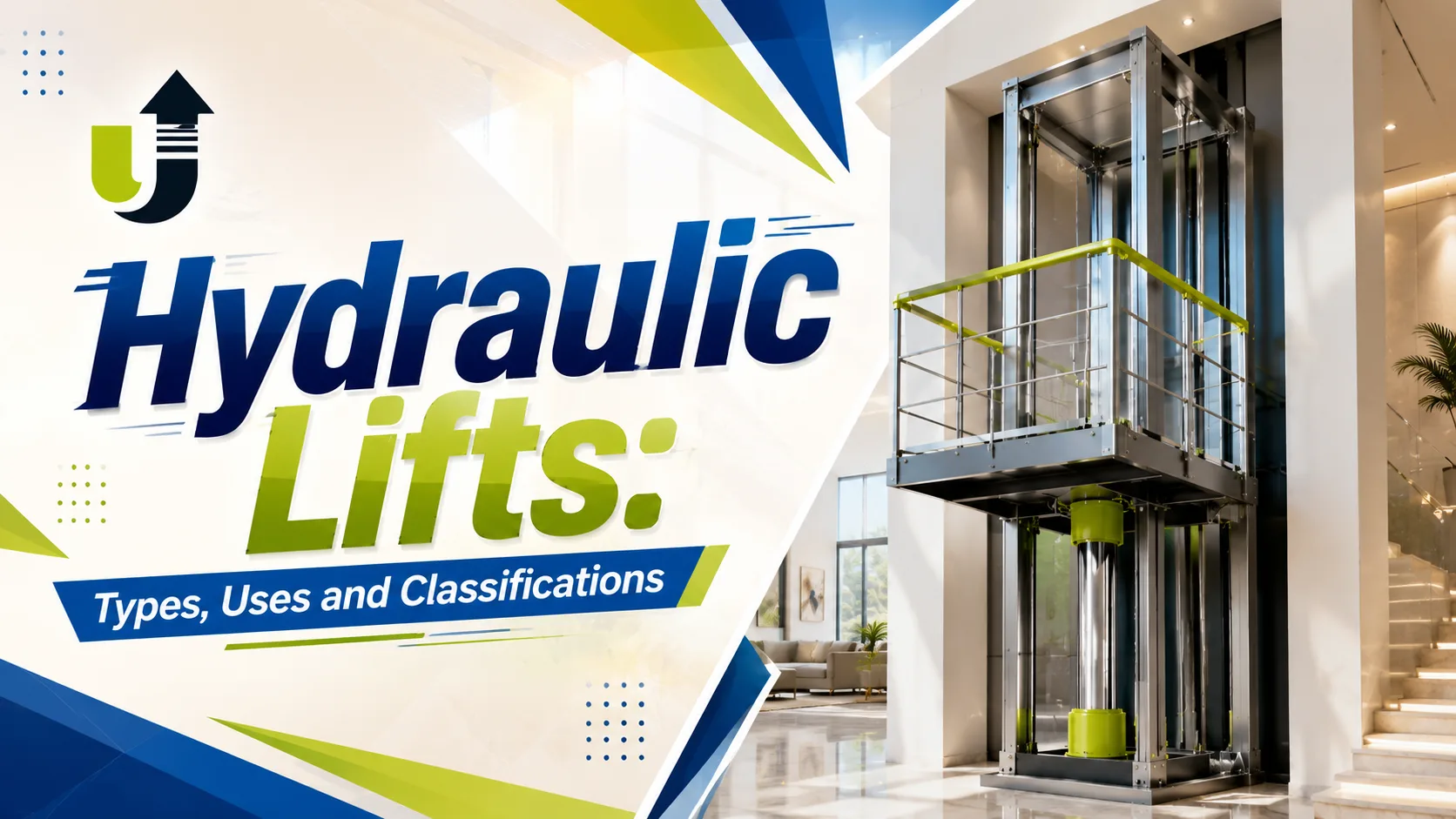
The hydraulic lift definition refers to a lifting device that uses hydraulic pressure generated by fluid movement to raise or lower a platform, cabin, or load. These systems work on the principle of transmitting force through incompressible liquid, usually hydraulic oil.
A hydraulic lift consists of cylinders, pistons, valves, a hydraulic pump, and a reservoir. When hydraulic fluid is pumped into the cylinder, pressure builds up and pushes the piston upward, lifting the load. Releasing the pressure allows the lift to descend smoothly.
Types of Hydraulic Lift
There are several types of hydraulic lift available, each designed to serve a specific purpose. Understanding these lift types helps businesses choose the right solution based on their operational requirements.
- Passenger Hydraulic Lifts: These lifts are commonly used in residential and commercial buildings. We provide smooth vertical transportation and are known for their quiet operation and reliability.
- Goods Hydraulic Lifts: Designed for industrial use, these lifts are perfect for transporting heavy materials. A hydraulic weight lifting machine in this category can handle large loads efficiently, making it ideal for warehouses and factories.
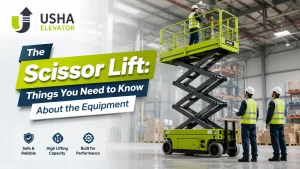
- Scissor Lifts: Scissor lifts are widely used in construction and maintenance work. Their unique design allows vertical lifting with stability, making them one of the most practical hydraulic lift examples in industrial environments.
- Car Lifts: These lifts are used in parking systems and automobile service centers. They help in lifting vehicles for maintenance or stacking, optimizing space usage.
- Dock Lifts: Dock lifts are used for loading and unloading goods in logistics and shipping industries. They ensure smooth transfer of materials between different heights.
Each of these lift types serves a unique function, and Usha Elevator offers customized solutions to match specific industrial requirements.
Also Read : Types of Industrial Goods Lifts: A Complete Guide
Hydraulic Lift Project Explanation in Industrial Use
A proper hydraulic lift project explanation involves understanding how these systems are implemented in real-world scenarios. In industries, hydraulic lifts are used to move heavy goods between floors, streamline production lines, and improve operational efficiency.
For example, in a manufacturing unit, a hydraulic weight lifting machine can be used to transport raw materials to different stages of production. Similarly, in warehouses, hydraulic lifts simplify the process of stacking and retrieving goods, saving time and labor.
Industrial Applications of Hydraulic Lifts
Hydraulic lifts are widely used across various industries due to their versatility and reliability. Some key applications include:
- Manufacturing Units: For moving heavy machinery and materials
- Warehouses: Efficient handling and storage of goods
- Construction Sites: Lifting workers and equipment to different heights
- Automobile Industry: Vehicle lifting for repair and maintenance
- Logistics and Distribution: Smooth loading and unloading operations
These hydraulic lift examples highlight how essential these systems are in modern industrial operations. Usha Elevator provides robust lifting solutions that meet the demands of these various sectors.
Uses of Hydraulic Lifts
Hydraulic lifts serve a wide range of applications across different sectors.
- Residential Buildings: Homeowners use hydraulic elevators for convenient floor-to-floor transportation and improved accessibility.
- Commercial Buildings: Offices, shopping centers, hotels, and hospitals utilize hydraulic lifts to transport passengers safely and comfortably.
- Warehouses: Hydraulic goods lifts facilitate efficient movement of inventory between different storage levels.
- Manufacturing Facilities: Factories depend on hydraulic lifting equipment for lifting raw materials, machinery components, and finished products.
- Automobile Industry: Vehicle maintenance workshops use hydraulic lifting systems for inspection, repairs, and servicing.
Advantages of Hydraulic Lifts
Choosing the right types of hydraulic lift comes with several benefits:
- High Load Capacity: Ideal for heavy-duty applications
- Smooth Operation: Ensures safe and controlled lifting
- Low Maintenance: Fewer moving parts reduce wear and tear
- Cost-Effective: Economical compared to other lifting systems
- Space Efficient: Requires less installation space
A hydraulic weight lifting machine is especially valuable in industries where precision and safety are critical.
Understanding the hydraulic lift definition, principle of hydraulic lift, and various types of hydraulic lifts helps users choose the right lifting solution for their needs. From residential elevators to industrial hydraulic lifting equipment, these systems continue to deliver dependable performance across multiple sectors.
The proper selection of hydraulic lifting cylinders, careful study of a hydraulic lift diagram, and knowledge of hydraulic lift explanation concepts ensure efficient and safe operation. Whether for a home elevator, warehouse goods lift, or industrial platform, hydraulic technology remains one of the most trusted lifting solutions available today.
Usha Elevator offers high-quality hydraulic lift systems designed to meet modern safety standards, operational requirements, and customer expectations, delivering reliable vertical transportation solutions for every application.